
Depicting Art Through Natural Stones
Whether it be a simple craft or a candid work of art, natural stones can be a suitable material. Throughout history, stones have proven themselves valuable when it comes to sculpting or other forms of art. Easter Island is a location where massive sculptors called Moai stand. These statues were approximately built 1400 – 1650 A.D. Since those years, the industry and art of crafting have gone through a lot. These days, the forms and tools of artists have changed. However, their material of choice remains the same, being the natural stones.

the Moai Statues, Easter Island
the Art of Bringing Stone to Life
Stones are versatile elements, especially some like marbles. This quality is the primary reason why sculptors often go after varieties of marble to unveil delicate and intricate designs. For contemporary sculptors, too, the art of crafting things out of dead stone is therapeutic and feels like bringing the stone to life. There are even tales in the Greek mythology of a king and sculptor who had his statue, Pygmalion, brought into life literally. Therefore, the liaison between art and natural stones is vividly clear.

Realistic Roman Statues
Michelangelo and Marble
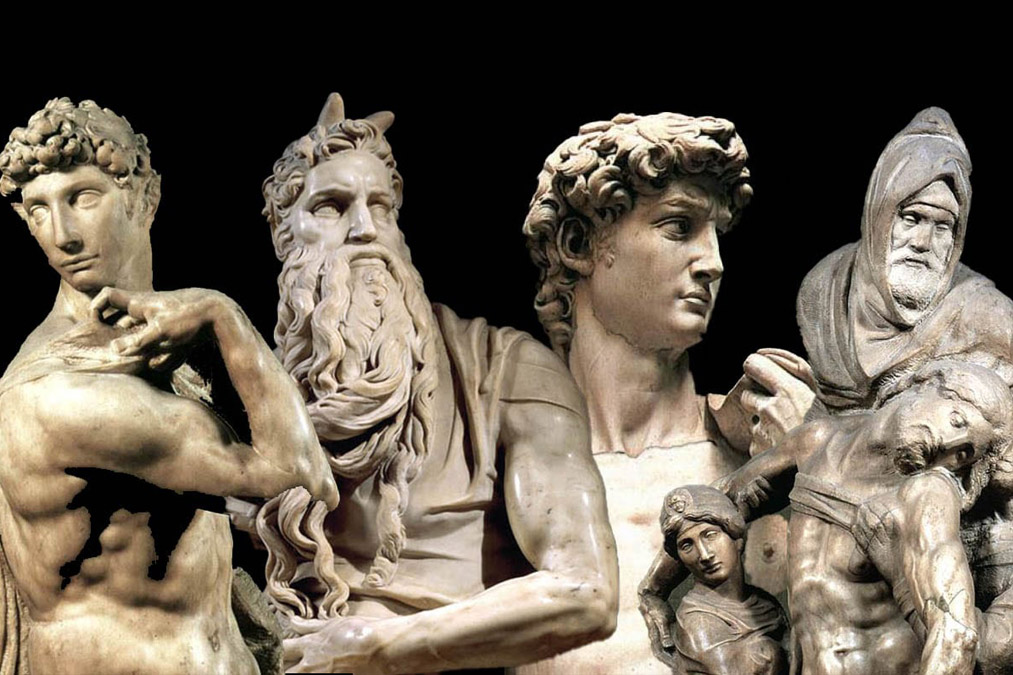
Later in the course of history, the Catholic church commissioned particular sculptors to be built. Moses by Michelangelo is namely one of these renowned sculptors. He achieved this in a way as though the iron chisel was made of a brush. The marble sculptor was so subtle and soft that one could not believe that Michelangelo had carved it out of stone. He even put horns for Moses that may come off as odd. Presently it is assumed the original word in Bible meant “rays” and not horns. What matters is that marble had the potential to deliver whatever the artist was after.

Moses by Michelangelo
Contemporary Art and Natural Stones
Modern and contemporary art also has gone after natural stones. Anish Kapoor, a contemporary artist, has sought refuge in using stones to express his sincere emotions. In an exhibition in Istanbul, he presented the world with a series of stone sculptors. As a British Indian, Kapoor faced many dualities in his art and life. He found a way to portray these dualities using granite in one of his masterpieces. The dichotomy Kapoor faced includes the east and west, the earthly matter and sky, and many more. This particular work of art, named “Double”, Kapoor points to all of these life experiences. The black granite he has employed fully serves this purpose. The height of this work of art makes it possible to reflect almost two diverse perspectives and pieces of reality standing in front of it. The separating line between the two slabs also adds to this visual effect.


