
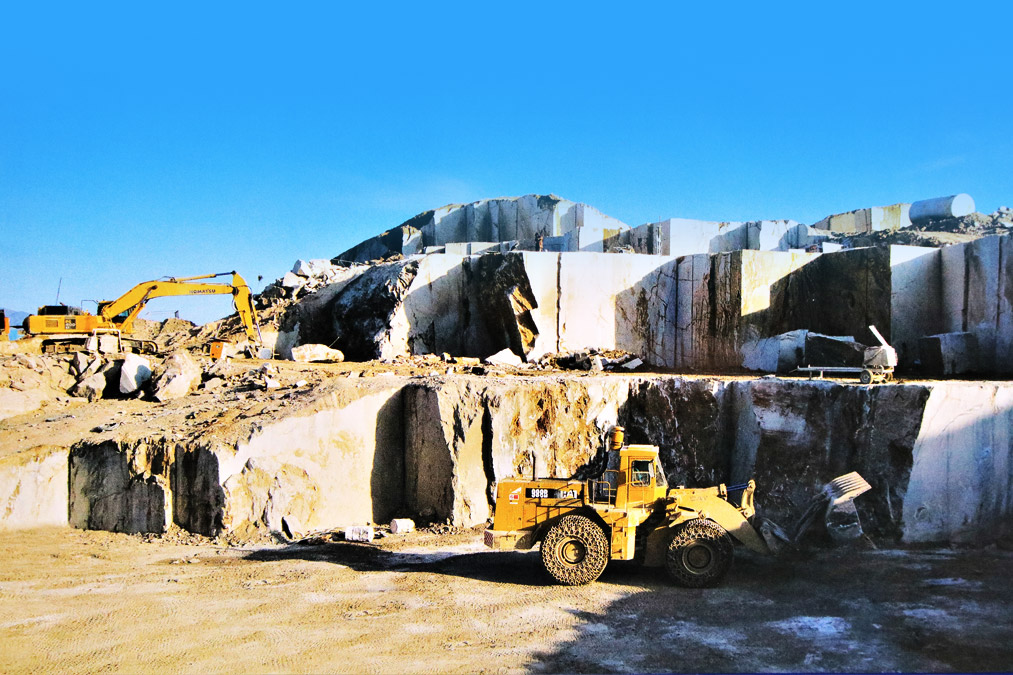
Iran quarries spread throughout the map
Variation wise, Iran quarries consist of 54 percent of marble, 20 percent of granite, 15 percent of crystals, 10 percent of travertines, and finally, 1 percent of onyx.
Quarries are a national wealth essentially. Iran, hopefully, is home to a wide variation of building stones. In Iran, one-fourth of the quarries found contain building stones. In the other competing countries such as Brazil and India, only one kind of granite is there to mine. Another instance is Italy that only has marble quarries. Having various quarries comes in handy in the face of the constant changes of trends. As a result, we can fully serve all appetites. This way, we would not need to impose one particular stone on the customers due to the lack of variations. Now let us probe those cities home to these quarries in Iran.

Esfahan, ranking first in the country stone industry
Fifty percent of the province quarries contain building stones. Home to 148 quarries, this province is the most centralized hotspot of building stones. Esfahan comes in the first place of the production volume by Producing 4 million and 200 thousand tons of stones annually. The 2000 stone cutting factories have made the province the center of stone and stone products. Moreover, Esfahan’s location in the center of Iran and its bright and skilled workers give Esfahan an edge over other provinces.
West Azarbaijan
The province is crucial with the variation it offers. West Azarbaijan has a record of more than 400 thousand tons of building stone extraction annually. The quarries in this province contain marble, onyx, and granite stones. There are unique kinds, only found here. In west Azarbaijan, 437 units have the exploitation license among them, 181 are active in the building stone quarries.
Annually, more than 400,000 tons of building stones are the products of this province with various usages. Granite, syenite, basalt, onyx, marble, and crystals are the most important products of this province. Due to West Azarbaijan’s proximity to neighboring countries such as Armenia, Turkey, and Iraq, more than 40 percent of the products end up in those countries.
Fars
Fars, one other hotspot of quarries, has crystals and marbles summing up 15 percent of its extractions. The 398 active stone cutting units make up 10 percent of the production of the country.
Because of the high quality of the stone-cuts, the province has a 28 percent share in the export performance.
Yazd
More than one-third of the quarries active in Yazd is extracting building stones. These stone quarries produce 1 million and 300 thousand tons yearly. The variation is never a hassle to the province; 28 kinds of granite stones are in these quarries. The notable target countries to export to are Iraq, UAE, and the Republic of Azerbaijan. With 165 active units, 2000 workers are actively working in this industry.
Markazi
Home to 64 travertine quarries, the province ranks second after Esfahan. Markazi is the source of the countries travertine supplies. Mahalat city is famous as the heart of travertine worldwide with its variation and diversity.


